
‘Abandoning Europe’: Trump’s moves deepen Atlantic divide
European politicians see US as sidelining allies, undermining Ukraine, and reshaping the transatlantic alliance around American economic interests, analysts say- German political scientist Volker Perthes says European security is no longer a US priority, calling Trump ‘a wake-up call’ for Europe- 75% of Germans now view transatlantic relations negatively, up from 25% last year, according to recent survey- Foreign policy expert Olaf Bohnke argues Europe ‘also has cards to play,’ citing Washington’s need for
By Ayhan Simsek
BERLIN (AA) – The Trump administration’s direct negotiations with Russia to end the war in Ukraine, combined with its newly unveiled national security strategy, have opened one of the most serious ruptures in US-Europe relations in decades.
European politicians accuse Washington of sidelining allies, undermining Ukraine, and reshaping the transatlantic alliance around American economic interests. Analysts describe the shift as a historic turning point: a Europe forced to confront the reality that the US may no longer be its strategic anchor.
The reaction has been blunt. Some European lawmakers accused US President Donald Trump of “betraying” Ukraine, while others warned that the new security strategy is another sign that the US is “abandoning Europe.”
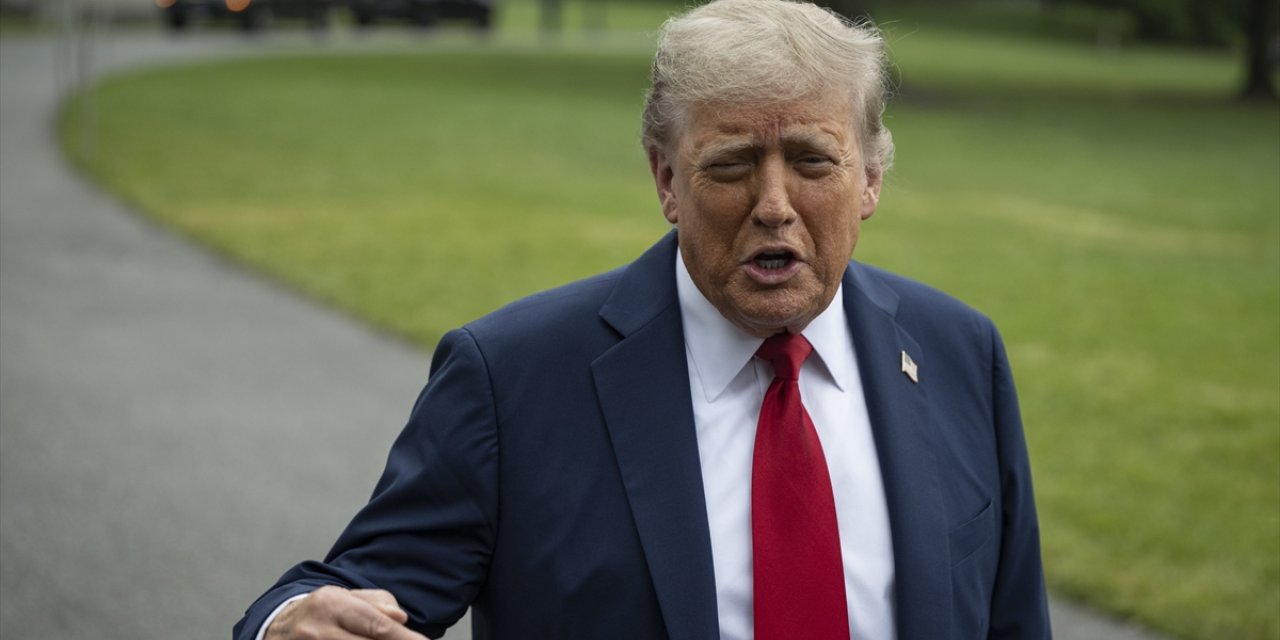
Volker Perthes, a prominent German political scientist, said Europe has been hit by two shocks at once: the Russia-Ukraine war and the unpredictability of US policy under Trump.
“We know that Trump is not interested in European interests. He is interested in American interests, and he thinks that those interests are the only ones that really count,” he told Anadolu.
Perthes, a senior fellow at the German Institute for International and Security Affairs, said the shift predates Trump but has taken on fundamentally new dimensions in his second term.
“Trump is a wake-up call for the Europeans … Even former US President (Barack) Obama, whom we loved in Europe, said that he is pivoting to Asia – because European security was no longer so much a priority interest for the US as it used to be during the Cold War.”
- A widening schism
The immediate trigger for the latest crisis was Trump's 28-point plan for Ukraine, negotiated directly between US and Russian envoys without consulting Ukraine or European partners.
European leaders were caught by surprise when they learned its contents through media leaks. The proposal demands sweeping concessions from Ukraine, including territorial concessions, limits on its military, and NATO’s formal refusal to consider Ukrainian membership.
Manfred Weber, leader of Europe’s center-right bloc in the European Parliament, said the moment proved Europe must “upgrade EU to European NATO.”
Perthes believes such reactions will now push Europe toward a historic shift: accelerating steps toward defense autonomy and reducing its dependency on Washington.
“There is a crisis, and crises in history are always an opportunity to rethink your own policy,” he said. But he emphasized that building European strategic capacity will take time – and must also include non-EU partners like the UK, Norway and Türkiye. “Strategic autonomy is being taken seriously, but it needs time to build it,” he added.
- Public opinion turns against Washington
Across Europe, public sentiment mirrors political alarm. Opinion polls show a steep decline in trust toward the Trump administration, particularly in Germany, France, Spain, Denmark, and the UK.
A European Council on Foreign Relations survey found many Europeans now see the US merely as a “necessary partner,” not an “ally.” Trump’s tariff threats, shifts in Ukraine policy, and his questioning of NATO commitments were among the sources of friction.
Another recent survey by the Korber Foundation, which regularly conducts research on foreign policy issues, reveals this significant shift in Germany, Europe’s largest economy and most populous country.
Thomas Paulsen, chairman of the foundation’s executive board, told Anadolu: “Nearly 75% of Germans have a negative look at transatlantic relations. That is a big change against the year before, when it was just about 25%.”
Germans now rank relations with the US among the top three foreign-policy challenges, following the Ukraine conflict and Israel’s genocidal war on Gaza, and above migration or climate change.
“Germany and Europe have to become stronger,” Paulsen said. “In this world full of tensions … you can only play a relevant role … if you are strong politically, economically and militarily. I think this is a big lesson to be learned.”
- Transactional ties
Tensions sharpened further last week when the US national security strategy controversially rejected European governments’ view of Russia as an “existential threat.” Instead, the document sharply criticized European governments for opposing far-right, anti-immigration movements, and accused them of suppressing free speech and political opposition.
“Our goal should be to help Europe correct its current trajectory,” it stated, a line that alarmed diplomats in Brussels, Paris, and Berlin.
Foreign policy expert Olaf Bohnke said the shift is unmistakable: a decades-long alliance once viewed as deeply strategic and rooted in shared democratic values has given way to a purely transactional and unpredictable approach.
“Trump acts in a very transactional way. He just looks into what’s in it for the US, and we could see this in the 28-point plan as well,” he said, noting reports that Trump’s envoys discussed multibillion-dollar business deals with Russia during the peace talks.
“We better prepare for the worst case from a European perspective and not trust as we did in the past. Instead of complaining about a broken relationship with the US … the Europeans should focus on what responsibilities they have and what they can do to develop a position of strength.”
- ‘Europe also has cards to play’
For Bohnke, European weakness is not inevitable. The continent still holds major leverage, particularly economic.
“If the Europeans would stand there and say, ‘Here are our billions in investment and here are our capabilities and military assets, we don’t need the US,’ then I think Trump would reconsider how he behaves,” he said.
Bohnke, a longtime political adviser in the German parliament, emphasized that the US also needs Europe.
The European market is significant for American firms, he noted, suggesting that European capitals use this leverage as a strategic negotiating tool.
“You can always negotiate if you have interesting cards at hand. Europe is a huge market for them – 450 million consumers. That’s bigger than the US, bigger than any other market,” he said.
“Since the US chose to go into confrontation with China, where else could be a more interesting market than Europe?”
Kaynak:
This news has been read 800 times in total





Türkçe karakter kullanılmayan ve büyük harflerle yazılmış yorumlar onaylanmamaktadır.