

Chinese researchers discover rare meteorite relics in Chang'e-6 lunar samples
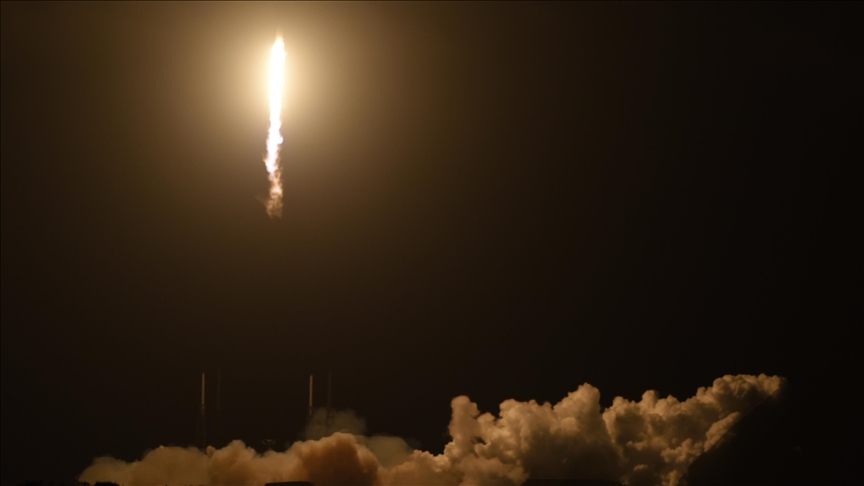
In 2024, Chang'e-6 made history by bringing 1,935.3 grams of lunar far-side samples back to Earth
By Berk Kutay Gokmen
ISTANBUL (AA) – Chinese researchers studying lunar samples brought back by China's Chang'e-6 mission have identified rare meteorite relics that can potentially reshape our understanding of mass transfer in the solar system, state-run Xinhua News reported on Tuesday.
Published in the journal Proceedings of the National Academy of Sciences, the study was headed by a research team from the Guangzhou Institute of Geochemistry under the Chinese Academy of Sciences.
The CI chondrites, a type of stony meteorite, are found very rarely on Earth, accounting for less than 1% of all collected meteorites.
Unlike Earth, the Moon has almost no atmosphere and plate tectonics, which means that it preserves a pristine record of ancient asteroid impacts like a "natural archive."
By employing advanced methods to analyze mineral compositions and oxygen isotopes, researchers examined lunar soil and confirmed that the fragments came from CI-like chondrites.
The study suggests that the Earth-Moon system may have experienced more collisions with carbonaceous chondrites than previously thought.
According to Lin Mang, a researcher, this discovery not only shows that material from the outer solar system can migrate to inner solar system, but also offers new insights into the origins of water on the Moon's surface.
In 2024, Chang'e-6 made history by bringing 1,935.3 grams of lunar far-side samples back to Earth, and marked the first time that humans have returned samples from the Moon's far side.
The far side of the Moon is the lunar hemisphere that always faces away from Earth, opposite to the near side, because of synchronous rotation in the Moon's orbit.
Kaynak:
This news has been read 2436 times in total


Türkçe karakter kullanılmayan ve büyük harflerle yazılmış yorumlar onaylanmamaktadır.