
Europe split over US action in Venezuela as calls for international law clash with support for Maduro’s capture
Despite broad agreement that Nicolas Maduro 'lacked legitimacy,' US operation revealed divisions over military action
By Melike Pala
BRUSSELS (AA) - European governments have reacted with diverging positions following a US military operation in Venezuela that led to the capture of President Nicolas Maduro and his wife, exposing deep divisions within Europe over sovereignty, international law, and relations with Washington.
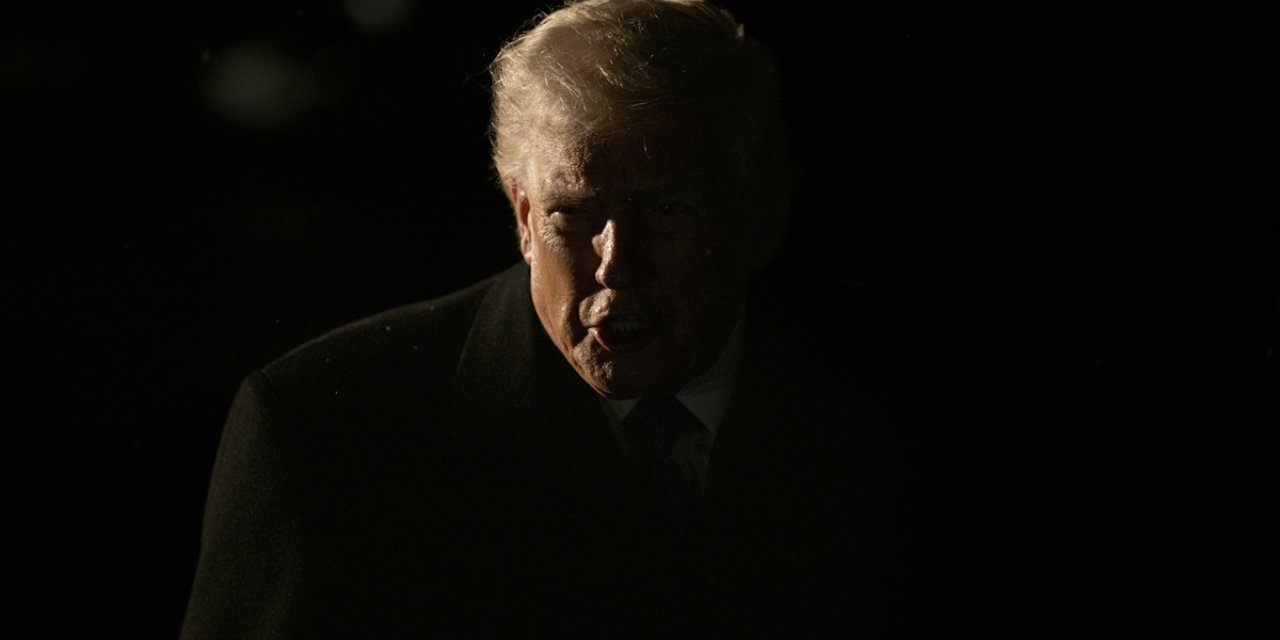
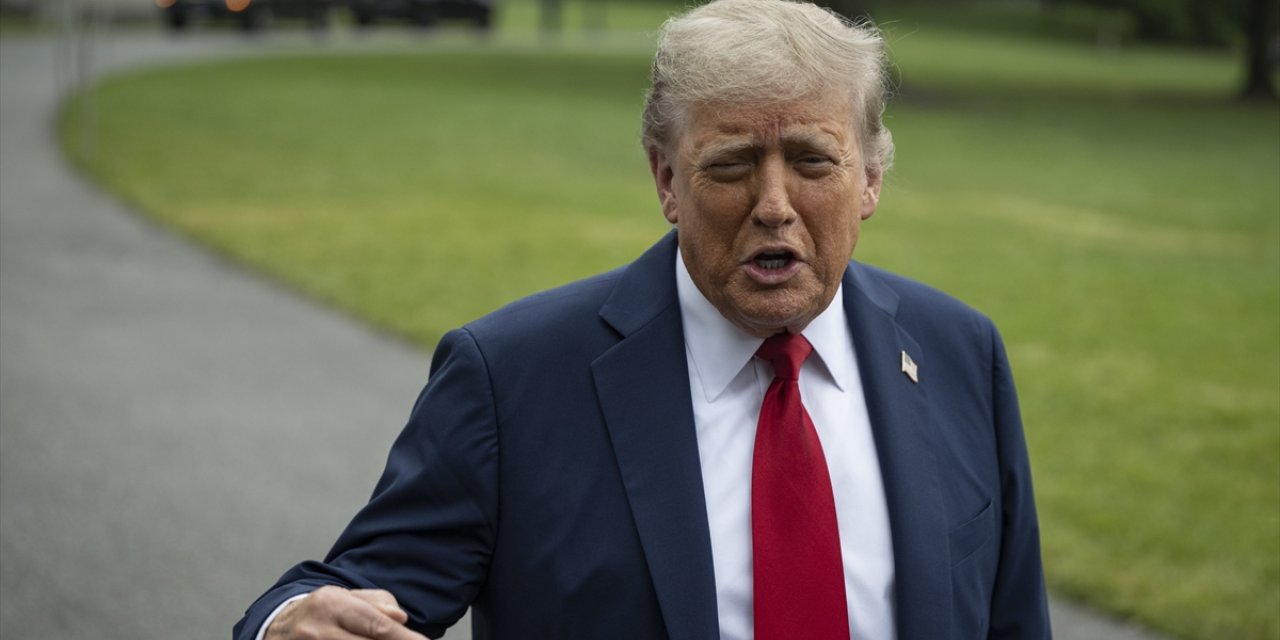
On Jan. 3, President Donald Trump said that the US military action on Venezuela resulted in the capture of Maduro and his wife Cilia Flores, also pledging to assert American control over the country for the time being, with US troops if necessary.
Maduro and Flores are being held at the Metropolitan Detention Center in Brooklyn and were brought before US Judge Alvin Hellerstein in New York on Monday, where the duo pleaded not guilty to US federal charges tied to drug trafficking and alleged cooperation with gangs designated as terrorist organizations.
Despite broad agreement within the EU that Maduro lacked democratic legitimacy, the US operation has underscored Europe's lack of unity when military force is used by its closest ally. While some capitals prioritize the end of authoritarian rule and regional security concerns, others insist that sovereignty and international law must not be selectively applied.
At the EU level, the dominant line has been one of caution. Twenty-six EU member states called for calm and restraint, urging respect for international law and the UN Charter, in a joint statement issued by EU foreign policy chief Kaja Kallas. Hungary was the sole member state not to support the statement.
"The European Union calls for calm and restraint by all actors, to avoid escalation and to ensure a peaceful solution to the crisis," the statement said, stressing that under all circumstances international law must be upheld. It also recalled the "particular responsibility" of UN Security Council members to safeguard the international security architecture.
While reiterating that the EU does not recognize Maduro as a democratically elected president, the bloc emphasized that Venezuela's future must be decided by its people and called for a Venezuelan-led, peaceful transition to democracy.
Boka Janos, Hungary's EU affairs minister, sharply criticized the bloc's approach. He said the statement "clearly exposes the deep crisis of the EU's common foreign policy." According to him, the EU lacks both tools and influence in global affairs and is unable to define its interests in the era of great-power politics.
- Strong condemnation from Spain, France voices legal objections
However, beyond this common EU framework, national responses have revealed significant fractures.
Spain emerged as one of the most outspoken critics of the US action. Prime Minister Pedro Sanchez said Madrid would not recognize the US "intervention," despite having long refused to recognize Maduro's government, reiterating that international law and the peaceful resolution of conflicts must be defended "always and everywhere."
Left-wing parties and movements across Europe strongly condemned the US operation. In Spain, Podemos leader Ione Belarra described the intervention as "state terrorism" and called for cutting ties with Washington, accusing the EU and Spanish authorities of acting as "lackeys" of the US.
France also raised legal objections. Foreign Minister Jean-Noel Barrot said the US operation violated the principle of non-use of force under international law, warning that "a lasting political solution cannot be imposed from the outside."
Although President Emmanuel Macron welcomed the end of Maduro's rule and expressed hope for a democratic transition, Paris stressed that legality and sovereignty must remain central.
Pascal Confavreux, spokesperson for the French Foreign Ministry, said that while Paris regrets the lack of respect for international law, it will not mourn Maduro's capture.
In Germany, the operation triggered visible differences within the governing coalition. Vice Chancellor Lars Klingbeil called the US attack "very worrying," arguing that Maduro's authoritarian rule could not justify disregarding international law.
Chancellor Friedrich Merz took a more cautious stance, describing the legal assessment of the US intervention as "complex," while stressing the need to avoid further instability.
Austrian Vice Chancellor Andreas Babler described the US strikes as a violation of the UN Charter and warned that Europe must offer an alternative to "the law of the jungle" as a political method.
Slovak Prime Minister Robert Fico said the strikes demonstrated a "deepening breakdown of the international order" and rejected what he called the sidelining of international law.
"Military power is used without the mandate of the UN Security Council, and everyone who is great and strong does what he wants to promote his own interests," Fico wrote on Facebook, warning that the EU must apply consistent standards to all conflicts, including Ukraine.
- Italy, Greece, other nations focus on Maduro's removal from power
In contrast, several governments closer to Washington placed greater emphasis on the fall of Maduro rather than the legality of the intervention.
Italian Prime Minister Giorgia Meloni, one of the European leaders with the closest ties to US President Donald Trump, said Italy had never recognized Maduro's electoral victory and supported the Venezuelan people's aspiration to democracy.
While reiterating Rome's traditional opposition to foreign-imposed regime change, her office described certain "defensive" interventions as legitimate when state actors are involved in drug trafficking, a reference to US accusations against Maduro.
Greek Prime Minister Kyriakos Mitsotakis welcomed what he described as the end of a "brutal and repressive dictatorship," arguing that the priority should now be a swift and peaceful transition rather than a "comment on legality" on the US action, which causes strong criticism from the public, including former prime ministers and officials.
Sweden's Prime Minister Ulf Kristersson similarly stressed that Maduro lacked democratic legitimacy and said Venezuelans had been "freed from dictatorship," while adding that all states still have a responsibility to act in accordance with international law.
Shortly after Maduro's captivity, Poland’s Foreign Minister Radoslaw Sikorski wrote on social media: "It couldn't have happened to a nicer guy." Meanwhile, the government has maintained a cautious tone and announced an analysis of the consequences and preparations for a "new situation."
Kaynak:
This news has been read 552 times in total


Türkçe karakter kullanılmayan ve büyük harflerle yazılmış yorumlar onaylanmamaktadır.