
EXPLAINER - Trump's Western Hemisphere playbook: From Monroe Doctrine to Donroe Doctrine
Trump calls US military operation against Maduro an expansion of ‘Monroe Doctrine’, reframing it as ‘Donroe Doctrine’ to assert US dominance in Western Hemisphere- The US president has accused Venezuela of 'increasingly hosting foreign adversaries in our region and acquiring menacing offensive weapons that could threaten US interests'
By Rabia Iclal Turan
WASHINGTON (AA) — US President Donald Trump has cast the military operation that led to the capture of Venezuelan President Nicolas Maduro and his wife, Cilia Flores, as part of a broader effort to reassert US dominance in the Western Hemisphere, invoking and reinterpreting the centuries-old Monroe Doctrine.
Speaking after the attack in Venezuela, Trump said the doctrine had been significantly expanded under his administration, referring to the approach as the “Donroe Doctrine.”
“The Monroe Doctrine is a big deal, but we’ve superseded it by a lot, by a real lot. They now call it the Donroe document,” Trump said. “Under our new national strategy, American dominance in the Western Hemisphere will never be questioned again.”
- What is the Monroe Doctrine?
The Monroe Doctrine, first articulated by President James Monroe on Dec. 2, 1823, declared the Western Hemisphere off-limits to European colonization or political interference, warning that such actions would be viewed as threats to US security.
In return, Washington pledged not to intervene in European affairs.
Over time, the doctrine evolved from a warning to European powers into a justification for US intervention in Latin America.
In 1904, President Theodore Roosevelt introduced the Roosevelt Corollary, asserting the right of the US to intervene in cases of “flagrant and chronic wrongdoing by a Latin American Nation.”
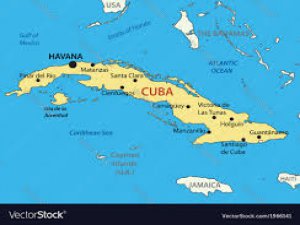
That interpretation paved the way for US military interventions in Mexico, Cuba, Nicaragua, and the Dominican Republic.
- Record of US interventions in Americas
In the 1860s, Washington pressured France to withdraw its forces from Mexico, contributing to the collapse of Emperor Maximilian’s rule.
During the Cold War, the doctrine was invoked to counter communism, including the 1962 demand that Soviet missiles be removed from Cuba and US backing for the Contra rebels fighting Nicaragua’s Sandinista government, a campaign that later led to the Iran-Contra scandal.
The US supported the 1954 overthrow of Guatemalan President Jacobo Arbenz, whose land reforms alarmed US business interests.
US troops invaded Haiti in 1915 and remained for nearly 20 years.
In 1961, Washington backed the failed Bay of Pigs invasion against Cuba’s Fidel Castro. Other interventions followed in the Dominican Republic in 1965, Grenada in 1983, and Panama in 1989, when the US deposed de facto ruler Manuel Noriega over drug trafficking charges.
- Trump’s interpretation: ‘Donroe Doctrine’
Trump has accused Venezuela under Maduro of “increasingly hosting foreign adversaries in our region and acquiring menacing offensive weapons that could threaten US interests.”
While Trump did not name specific countries, Secretary of State Marco Rubio said Sunday that Washington would not allow Venezuela’s oil industry to fall under the control of rivals such as China, Russia, or Iran.
“We don’t need Venezuela’s oil … What we will not allow is for the country’s oil industry to be controlled by adversaries of the United States,” Rubio said.
The White House’s December national security strategy frames this approach as a “Trump Corollary” to the Monroe Doctrine, stating that the administration aims to “restore American preeminence in the Western Hemisphere” and safeguard US access to strategically vital regions.
The strategy prioritizes countering drug trafficking, managing migration flows, and reinforcing US military influence.
Trump has also openly backed conservative leaders across Latin America, including approving a $20 billion bailout for Argentina’s President Javier Milei, while maintaining close ties with El Salvador’s Nayib Bukele and former Brazilian President Jair Bolsonaro.
In Brazil, the Trump administration described Bolsonaro’s prosecution as politically motivated and briefly sanctioned Supreme Court Justice Alexandre de Moraes before later lifting the measures.
Left-leaning governments in Venezuela, Colombia, Brazil, and Cuba have faced sanctions, tariffs, and military pressure under the policy.
In January, Trump suggested the US could take control of the Panama Canal, accusing Panama of mismanagement and allowing China to expand its influence. He also signed an executive order renaming the Gulf of Mexico as the “Gulf of America.”
For critics, the “Donroe Doctrine” signals a return to an interventionist era long associated with US policy in Latin America.
For Trump, it represents a restoration of American power, placing the Western Hemisphere at the center of US national security strategy.
Kaynak:
This news has been read 214 times in total


Türkçe karakter kullanılmayan ve büyük harflerle yazılmış yorumlar onaylanmamaktadır.