

FACTBOX – US, Venezuelan military capabilities as tensions rise
US military buildup in Latin America is the largest since its 1989 invasion of Panama- American assets in the region include advanced fighter jets, aircraft carrier, and thousands of troops and bombs- Venezuela has responded to the buildup with a mobilization of its own, posturing for a potential drawn-out guerrilla campaign
By Michael Hernandez
WASHINGTON (AA) – Tensions between the US and Venezuela have intensified sharply as President Donald Trump insists that his Venezuelan counterpart Nicolas Maduro’s “days are numbered” amid an escalating campaign against his government.
Trump has so far declined to rule out the use of military force to secure Maduro’s ouster, saying the Venezuelan president can leave power “the easy way” or “the hard way.”
In an interview with Politico published last week, the US president further refused to rule out the possibility of deploying American troops to the Bolivarian Republic.
“I don't comment on that,” Trump said when asked if he would order US boots on the ground in Venezuela. "I wouldn’t say that one way or the other.”
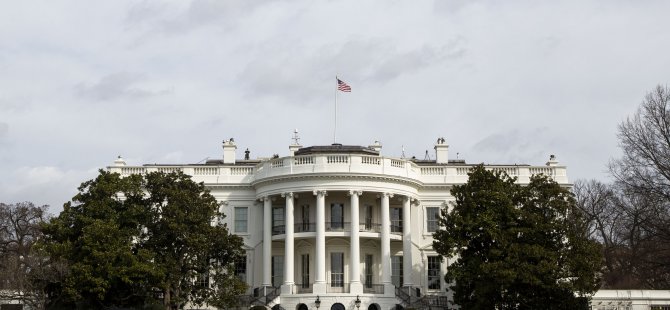
Just one day later, the US seized an oil tanker off the Venezuelan coast. The White House defended the action, saying the ship is a "sanctioned shadow vessel" that was "known for carrying black market sanctioned oil" to Iran's Islamic Revolutionary Guard Corps.
Fast forward several days, and Washington took its pressure on Venezuela’s oil sector a step further, announcing a “total and complete blockade” on all sanctioned oil tankers entering and leaving the country’s waters.
All of this comes amid the largest US military buildup in Latin America since the 1989 US invasion of Panama, and amid ongoing strikes on vessels in the Caribbean Sea and eastern Pacific Ocean that the Trump administration says are trafficking narcotics to the US.
The US has conducted 26 known strikes on what it calls “narco-terrorist” boats since September, killing 99 people to date, according to numbers announced by the administration. The US president has pledged to expand the campaign to land-based targets next, saying the attacks will be carried out wherever the US finds suspected drug traffickers.
- Largest US military buildup in Latin America in over 30 years
Since the summer, the Trump administration has been steadily ramping up US forces and military assets in the region, deploying warships, aircraft and thousands of troops while simultaneously expanding military installations.
Amid the buildup, Secretary of Defense Pete Hegseth announced on Nov. 13 the start of what he dubbed “Operation Southern Spear” to target “narco-terrorists” and protect “our homeland from the drugs that are killing our people.”
“The Western Hemisphere is America’s neighborhood – and we will protect it,” Hegseth said as he announced the mission.
The US has so far surged 11,000 American troops to the Caribbean on top of the nearly 2,700 service members normally staged in that theater, according to an analysis from the Washington-based Center for Strategic and International Studies (CSIS) think tank released in November.
About 150 special forces troops are currently operating from the MV Ocean Trader, which the center described as the “staging base” for the troops.
The heavily modified roll-on, roll-off cargo ship has been largely shrouded in mystery, but the War Zone military news website reports that it has been transformed into a floating helicopter base capable of also transporting the heaviest ground vehicles in the Marines’ and Army’s inventories.
The total US force posture is far short of the number needed for an amphibious landing or ground invasion, however. CSIS’s analysis indicated that at least 50,000 troops would be needed to conduct such an operation. Military planners would ideally want 150,000 troops to achieve an overwhelming force against Venezuela’s military, it said.
Beyond the armed forces, however, the US has amassed a wide array of weaponry, including thousands of ground attack missiles.
Part of the stockpile includes roughly 170 Tomahawk long-range cruise missiles in the region, including 55 that entered the region with the arrival of the Gerald R. Ford aircraft carrier strike group on Nov. 16. The Ford is the most highly advanced US aircraft carrier, and the Tomahawks are capable of striking targets throughout Venezuela.
In terms of warplanes, the US has based 10 F-35 stealth fighters in Puerto Rico, and has 48 other combat aircraft on the Ford. An unidentified number of additional fighter aircraft are staged in southern Florida.
There are also nearly 100 bomber aircraft staged within range of striking Venezuela from bases within the continental US, as well as 6 MQ-9 Reapers and 2 AC-130J gunships, according to CSIS.
In order to improve forward deployments of aircraft, the Trump administration has upgraded existing airfields in the US territory of Puerto Rico to allow for a larger buildup of aerial assets there.
In addition to the Ford carrier group, the Trump administration publicly acknowledged sending the Iwo Jima Amphibious Ready Group to the region in August. It includes the Wasp-class amphibious assault ship USS Iwo Jima and two San Antonio-class amphibious transport dock ships.
US officials confirmed in August that a nuclear-powered submarine had been sent to the region, though details since have been scant.
The White House did not provide an official tally of US military assets in the region by the time of publication.
- Venezuela: Mass mobilization and aged military stockpiles
Maduro has responded to the buildup with a mobilization of his own, ordering in November what he says are 4.5 million militia members to prepare to repel any action against Venezuela, posturing for a potential drawn-out guerrilla campaign should US forces invade.
The actual number of militia members, which would supplement Venezuela’s regular forces, may fall far short of that figure, however.
CSIS’s estimate puts the number of Bolivarian Militia members in the thousands.
The paramilitary was founded by late Venezuelan President Hugo Chavez in 2009, and was named after anti-imperial leader Simon Bolivar, who won the freedom of several Latin American nations, including Venezuela, from Spain in the early 19th century.
There are roughly 63,000 troops in the Venezuelan Army with an additional 23,000 in the National Guard and 15,000 in the Marines, according to CSIS.
Much of Venezuela’s armed forces are equipped with aging Soviet-era munitions and platforms, including T-72 tanks, Buk-M2E and S-125 air defense systems, as well as Su-30 fighter jets.
The Venezuelan Air Force also flies American F-16 fighter jets, but they are of the aged A/B models, according to CSIS. A broad swathe of Venezuela’s aircraft are not serviceable, with just 30 of 39 planes being operational, according to the center’s analysis.
Such armaments would be quickly overpowered by the more advanced American military, a fact likely known by Maduro as he downplays Trump’s threats to remove him from power. Maduro may instead be banking on loyalists carrying out sabotage and long-term destabilization in the event that he is ousted by force.
Kaynak:
This news has been read 205 times in total


Türkçe karakter kullanılmayan ve büyük harflerle yazılmış yorumlar onaylanmamaktadır.