
Italian aid worker says Gaza bombardment continues despite ceasefire
‘Everything we built over centuries has been shattered and scattered by what has happened in Gaza over the past two years,’ Gennaro Giudetti tells Anadolu
By Baris Seckin
ROME (AA) - Israeli bombardment in Gaza has decreased but not stopped despite the ceasefire, and airstrikes continue even as media attention fades, an Italian humanitarian worker who spent months in the territory said.
In an interview with Anadolu, Gennaro Giudetti, a logistics specialist who worked for UN agencies in Gaza from June-July 2024 and Feb.-Sept. 2025, said the situation remains dire, with Israel blocking critical supplies, including generators, tents, and medicine.
"After the ceasefire, bombardments decreased - be careful, it hasn’t completely stopped," Giudetti said. "The bombardments are still ongoing; they're just being talked about less now. Media attention has greatly decreased, but this doesn't mean the bombardments have ended or fully stopped.”
He said airstrikes and drone attacks persist but receive little coverage.
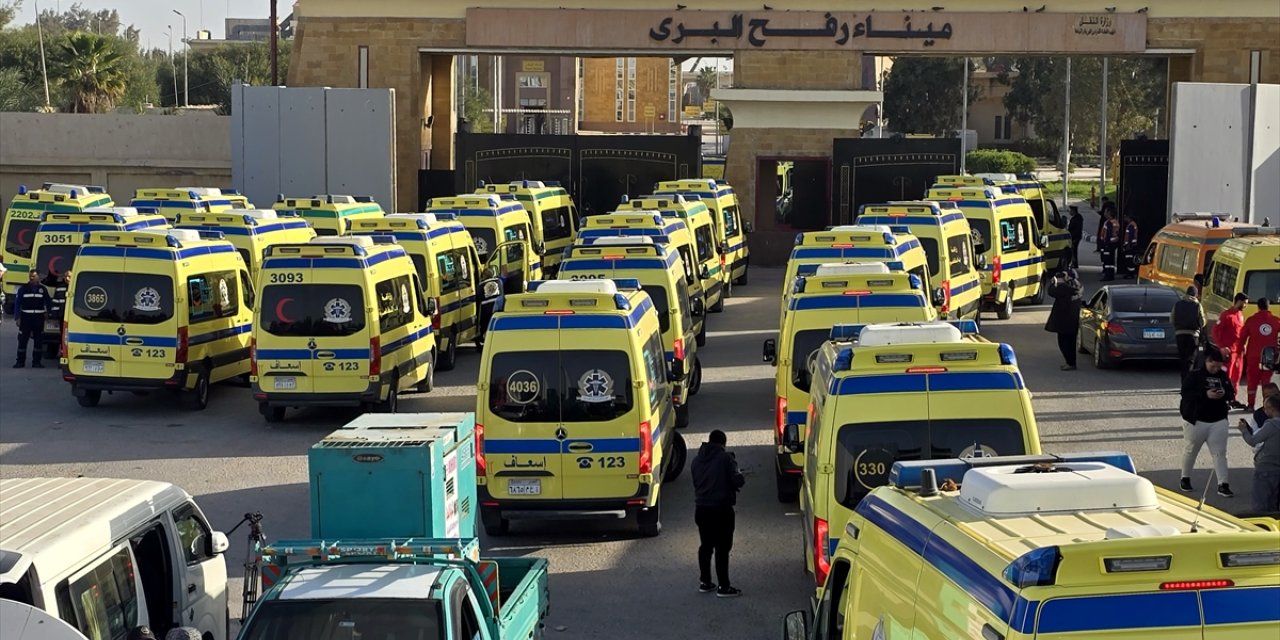
Giudetti left Gaza shortly before the ceasefire took effect in October. His work for the UN’s Food and Agriculture Organization and World Health Organization focused on delivering medical supplies to hospitals and organizations, including the Red Cross, Doctors Without Borders, and Emergency.
Much of his work involved evacuating hospitals - either before Israeli bombardments or salvaging equipment afterward.
"We were trying to understand how to repair them when they were bombed," he said, adding that his team carried out hospital evacuations either preventively when they believed facilities would be targeted, or after bombardments to identify equipment that could still be salvaged.
As an example, at the Turkish-Palestinian Friendship Hospital, which he said was bombed by Israel and later used as a military base, Giudetti’s team extracted oxygen machines, cylinders and concentrators before the attack. The equipment was redistributed to Al-Shifa Hospital, Nasser Hospital and other facilities for use in intensive care units, he said.
"Israel bans their entry, doesn't allow many medical equipment to enter," he said. "For this reason, protecting the few pieces of equipment remaining inside the Strip is vital."
The months before the ceasefire were particularly severe, Giudetti said.
"During May, June, July, life inside the Gaza Strip was really unsustainable because they weren't allowing trucks to enter - very few could get in and not always," he said. "The bombardments never stopped."
Israel controls all aid entering Gaza, he said, and restrictions remain severe despite the ceasefire.
“For example, more generators and batteries need to be permitted because there is no electricity in Gaza - Israel has cut the power. To respond to this humanitarian crisis, far more supplies are required. More tents need to be allowed in.”
He said Gaza’s reconstruction must begin immediately.
"It's not sustainable this way. It's not possible to live in tents, it's not humane," he said, adding that international attention has faded.
Giudetti sharply criticized the EU’s response.
"In Gaza, the EU died, international law died, international organizations died," he said. “Everything we built over centuries has been shattered and scattered by what has happened in Gaza over the past two years. All our values, agreements - everything we wrote and signed - has simply vanished.”
Giudetti said he fears that another country could invade and bomb a different nation, target humanitarian workers, deny journalists entry and impose censorship because international law no longer appears to apply equally.
He noted that the EU imposed 20 sanctions packages against Russia but none against Israel.
“Even now, there are still discussions about whether a sanctions package might be introduced. This actually marks the death of international law and the death of the EU itself. At its core, we have denied - especially - the children in Gaza, and for that we will never forgive ourselves,” he said.
Giudetti also questioned why international journalists remain barred from Gaza despite the ceasefire.
"We constantly hear in the international press that 'there's a ceasefire in Gaza.' Well, then why can't the international press enter Gaza?" he said. "Nobody is pressuring for the press to be able to enter."
The aid worker said he was deported for speaking about what he witnessed. Humanitarian organizations now face similar risks, he added, with many threatened with expulsion as Israel seeks to control international agencies.
"As humanitarian workers, if we speak, if we tell what we saw, we get deported, as happened to me," Giudetti said. "That's why I can no longer enter Gaza. That's why I hope to return one day, perhaps without having to ask Israel for permission."
*Writing by Seda Sevencan
Kaynak:
This news has been read 61 times in total





Türkçe karakter kullanılmayan ve büyük harflerle yazılmış yorumlar onaylanmamaktadır.