
UPDATE 2 - UN rights chief 'extremely worried' there could be a repeat of El-Fasher atrocities in Sudan's Kordofan
'From Darfur and the Kordofans to Khartoum and Omdurman and beyond, no Sudanese civilian has been left untouched by the cruel and senseless violence,' says Volker Turk- High commissioner says 'bloodshed has reduced, it has not stopped' in Gaza during ceasefire, as at least 386 people have been killed, 980 others injured according to authorities in enclave
UPDATES WITH MORE REMARKS
By Beyza Binnur Donmez
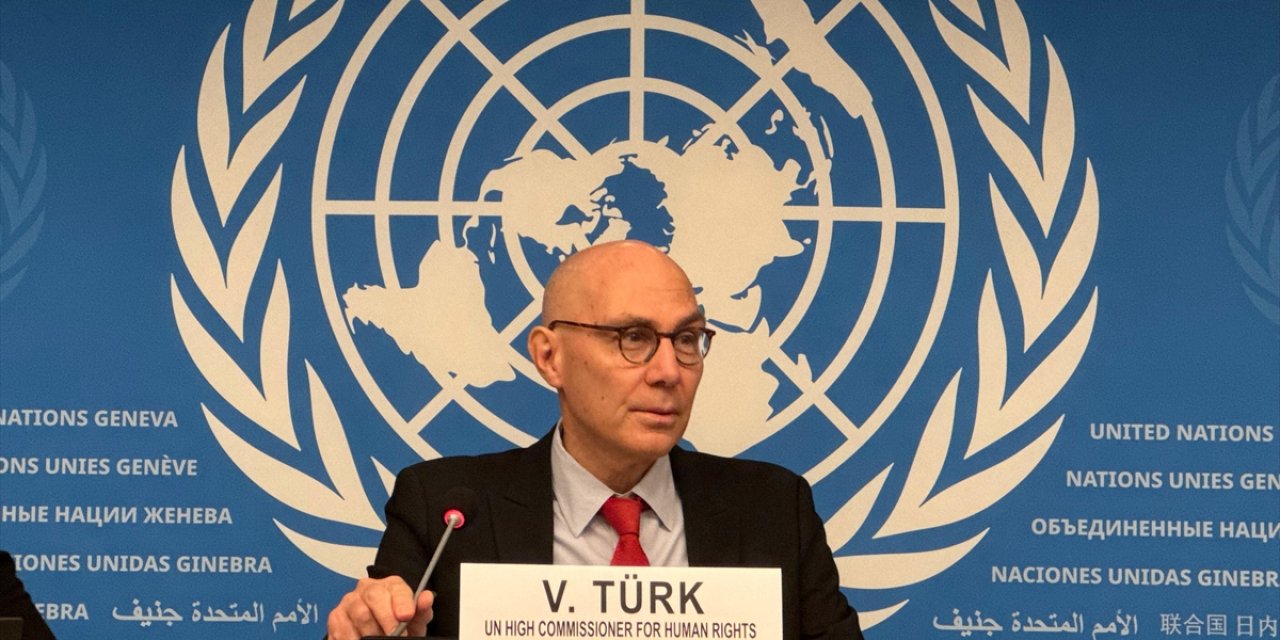
GENEVA (AA) - The UN human rights chief on Wednesday said he is "extremely worried" that a repeat of atrocities in El-Fasher, which went under the control of the paramilitary Rapid Support Forces late October, might be seen in Sudan's Kordofan.
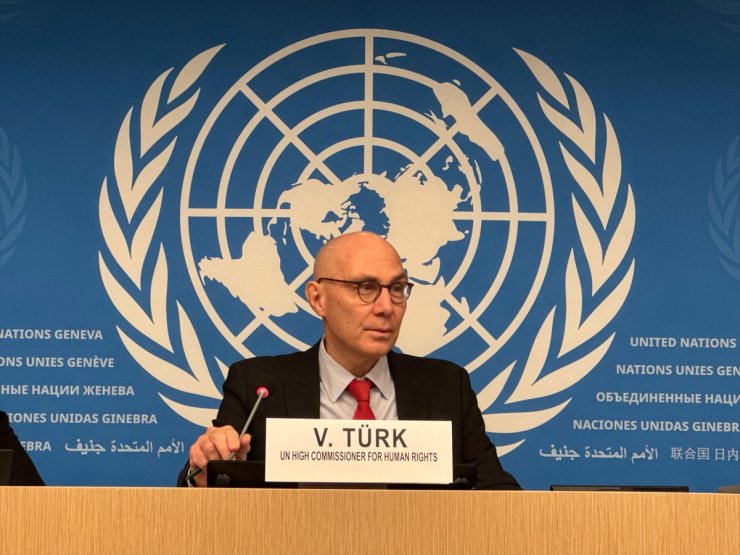
"From Darfur and the Kordofans to Khartoum and Omdurman and beyond, no Sudanese civilian has been left untouched by the cruel and senseless violence," Volker Turk told reporters in Geneva. "I am extremely worried that we might see in Kordofan a repeat of the atrocities that have been committed in El-Fasher."
Responding to a question regarding El-Fasher, he said: "We are talking about very serious atrocity crimes, war crimes for sure, potentially also crimes against humanity."
He stressed that there is an ethnically motivated violence that has come into play.
The three Kordofan states – North, West, and South – have seen weeks of fierce fighting between the army and the RSF, prompting tens of thousands of people to flee.
Of Sudan’s 18 states, the RSF controls all five states of the Darfur region in the west, except for some northern parts of North Darfur that remain under army control. The army, in turn, holds most areas of the remaining 13 states in the south, north, east, and center, including the capital Khartoum.
The conflict between the Sudanese army and the RSF, which began in April 2023, has killed thousands of people and displaced millions of others.
The RSF is accused of committing massacres, torture, and summary executions in El-Fasher.
- Gaza situation after ceasefire still 'worrying'
Turk said the rights office is also concerned about the current developments in Gaza, where Israeli violence and killing of civilians continues despite an October ceasefire.
Responding to Anadolu's question, he said: "We are worried about the current situation, because the bloodshed that we saw, the carnage that we saw in the past, has indeed no longer been there. But ... we have over 350 attacks that we recorded since the ceasefire, and they were all in the vicinity of the so-called 'yellow line,' with at least 121 Palestinians killed, including seven women, 30 children and many other injuries."
He said his office will continue to document and monitor the situation "very carefully," and urged all parties to "respect the ceasefire and to ensure that we can indeed move to the next phase."
Asked by Anadolu on the Israeli military chief declaring "yellow line" as the new border, Turk said the UN Security Council resolution is "very clear" about not defining any border or anything of that sort. It concerns a territory that must be respected in its entirety, he added.
"Gaza remains a place of unimaginable suffering, loss and fear. While the bloodshed has reduced, it has not stopped. Attacks by Israel continue, including on individuals approaching the so-called 'yellow line,' residential buildings, and IDP tents and shelters as well as other civilian objects," he said.
He added that access to essential services and goods remains "severely inadequate."
Regarding the occupied West Bank, he said: "We are seeing unprecedented levels of attacks by Israeli forces and settlers against Palestinians, forcing them from their land."
"This is a time to intensify pressure and advocacy – not to sink into complacency – for Palestinians across the occupied territory," he urged.
According to Gaza's media office, at least 386 people have been killed and 980 others injured by Israeli army fire since the truce.
Overall, since October 2023, Israel has killed more than 70,000 people in Gaza, mostly women and children, and injured over 171,000 others in the brutal assault that also left the enclave in ruins.
- Human rights 'underfunded, under attack'
Turk issued a stark warning about what he called a year of "dangerous contradictions," saying human rights protections are "underfunded, undermined, under attack."
Funding cuts were crippling global human rights work, he stressed, saying: "Our resources have been slashed, along with funding for human rights organizations – including at the grassroots level – around the world. We are in survival mode."
His office, he said, has "had about $90 million less than we needed this year," costing around 300 jobs and forcing reductions in work related to Colombia, the Democratic Republic of the Congo, Myanmar, Tunisia and elsewhere.
Treaty-body reviews also dropped sharply from 145 last year to 103, he noted. "We see that all this has extensive ripple effects on international and national efforts to protect human rights."
He contrasted shrinking human rights budgets with a sharp rise in funds for anti-rights groups and the arms industry, citing data that "almost $1.2 billion was mobilized by anti-rights groups in Europe between 2019 and 2023," while SIPRI reported record arms revenues of $679 billion in 2024.
"Profits for the arms industry are soaring, while funding for humanitarian aid and grassroots civil society plummets," he said.
- Civilian casualties 24% higher in Ukraine in 2025
Regarding the war in Ukraine, Turk drew attention to the increasing civilian toll of the conflict by saying civilian harm has "risen sharply" as casualties so far this year are 24% higher than the same period last year.
This is "largely due to Russia’s increased use of powerful long-range weapons in large numbers and its continuing efforts across broad front to capture further Ukrainian territory by armed force," he said.
Turk noted that large-scale attacks on Ukraine's energy system have caused emergency outages and prolonged daily electricity cuts, disruptions to water and heating services in many areas.
"Urgent steps need to be taken to alleviate suffering, including the return of transferred children, the exchange of all prisoners of war, and the unconditional release of civilian detainees held by Russian authorities," he said.
- Demonization of migrants should be countered
The high commissioner also spoke on rising xenophobia, urging states to take action to counter it as part of their responsibilities under international law.
"It is critical to counter the demonization of and hatemongering rhetoric against migrants and refugees," he said. "In various countries, worryingly, we are seeing violent pushbacks, large-scale raids, arrests and returns without due process, criminalization of migrants and refugees and those who support them, as well as the outsourcing of responsibilities under international law."
Turk urged states to embark on "an evidence-based policy debate on migration and refugee issues, anchored in international human rights and refugee law."
He warned that Myanmar’s military-imposed election “will only further deepen insecurity, fear and polarization throughout the country."
Kaynak:
This news has been read 1797 times in total




Türkçe karakter kullanılmayan ve büyük harflerle yazılmış yorumlar onaylanmamaktadır.