
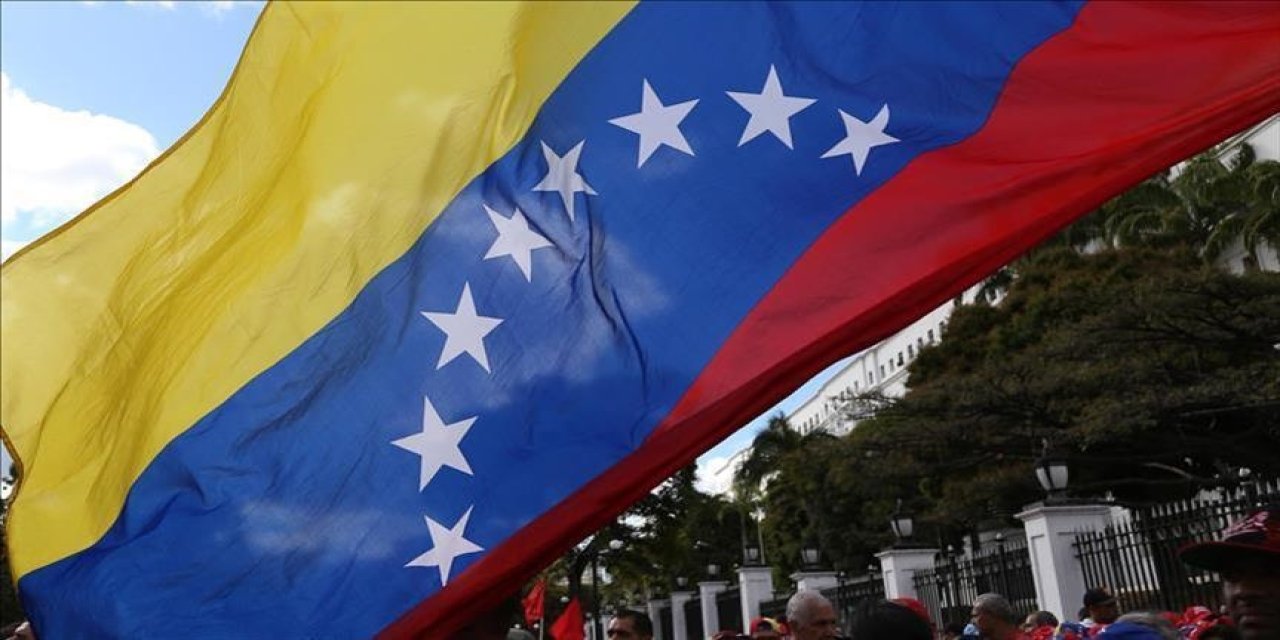
Venezuela oil output seen steady after US raid, but China trade faces uncertainty
US President Donald Trump says interim authorities in Venezuela agree to transfer up to 50 million barrels of sanctioned oil to US- Short-term disruptions in Venezuelan oil exports could emerge, says expert- Oil companies expected to await clarity on sanctions, US-Venezuela relations, domestic politics before making investment decisions
By Handan Kazanci
ISTANBUL (AA) - Venezuela’s oil production is unlikely to face immediate disruption following recent US military action, but heightened geopolitical uncertainty could affect exports – particularly to China – and further weaken investor confidence, analysts say.
On Jan. 3, the US carried out a military operation that resulted in the capture of Venezuelan President Nicolas Maduro, who was transferred to New York.
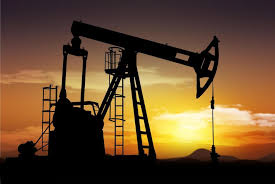
Following the operation, US President Donald Trump said Washington would play a direct role in Venezuela’s oil sector.
"We're going to have our very large United States oil companies, the biggest anywhere in the world, go in, spend billions of dollars, fix the badly broken infrastructure, the oil infrastructure, and start making money for the country," Trump said.
On Tuesday, the US president added that interim authorities in Venezuela had agreed to transfer between 30 million and 50 million barrels of sanctioned oil to the US.
"This Oil will be sold at its Market Price, and that money will be controlled by me, as President of the United States of America, to ensure it is used to benefit the people of Venezuela and the United States!" Trump wrote in a statement on his social media company Truth Social.
But despite Trump’s pledge to revitalize Venezuela’s oil sector, Ignacio Urbasos, a fellow in the Energy and Climate Program at the Madrid-based Elcano Royal Institute, told Anadolu that short-term disruptions could still emerge, particularly for Venezuelan crude exports bound for China.
In recent years, China has emerged as the biggest buyer of Venezuelan crude.
"Chinese buyers may temporarily delay payments or cargoes as they adopt a wait-and-see approach," he explained. "This could result in Venezuelan crude remaining 'on the water' until the geopolitical situation becomes clearer."
- Oil companies await clarity
Urbasos said the most vulnerable areas for Venezuela’s oil sector are financial and logistical rather than operational.
"China is likely among the main near-term losers, as the US may seek to reduce discounted Venezuelan oil flows to China that have largely moved through opaque trading routes," he added.
While Venezuela’s oil industry requires substantial investment to increase production, Urbasos said the near-term outlook remains weak.
"Oil companies are likely to postpone decisions until there is clarity on sanctions, US-Venezuela negotiations and the broader political trajectory,” he said. "A meaningful recovery in investment would depend on a clear political transition, legal security and institutional reform – none of which are guaranteed in the short term."
Recent security developments do not materially change Venezuela's current role in global oil markets, he said, adding that there is no evidence that the American intervention damaged oil fields, facilities or core infrastructure.
According to the US Energy Information Administration, Venezuela held about 303 billion barrels of proven oil reserves in 2023 – roughly 17% of the global total. Much of those reserves are located in the Orinoco Belt and consist of extra-heavy crude, making production technically complex and costly.
As a result of technical challenges, underinvestment and sanctions, Venezuela accounted for only about 0.8% of global crude production in 2023, with daily output around 742,000 barrels – down nearly 70% from 2013 levels.
Data from the Organization of the Petroleum Exporting Countries (OPEC) shows Venezuela has the world’s largest proven oil reserves, followed by Saudi Arabia with about 267 billion barrels, Iran with 209 billion barrels, Iraq with 145 billion barrels and Kuwait with 102 billion barrels.
"Over the long term, Venezuela could regain significance – potentially up to around 4 million barrels per day – but only under a very positive scenario involving political stabilization, reduced corruption, regulatory certainty and the return of skilled human capital," Urbasos said.
"Until then, Venezuela remains a constrained heavy-crude supplier rather than a major global swing producer."
- Future of oil markets linked to geopolitics
Francesco Sassi, a political scientist at the University of Oslo, told Anadolu that Venezuela's oil production and exports remain strategic military targets and could be involved in further actions in the hours and weeks ahead if the situation escalates.
"We're going to have a presence in Venezuela as it pertains to oil," Trump said on Saturday in response to a question about whether the US military would have a presence in Venezuela.
In December, Trump also said that all sanctioned oil tankers entering or leaving Venezuela would face a “full and complete blockade,” alleging that oil revenues were financing drug-related terrorism.
Sassi said energy is likely to play a central role in shaping the conflict’s strategic implications and the future of the Venezuelan government.
He said he does not expect an extreme surge in oil prices in the near term, pointing to ample global crude supply.
"Still, military tensions will become crucial in determining additional instability and will pose an upward pressure on global oil prices," he said.
On Venezuela’s outlook, he added that it is premature to forecast what could happen throughout the rest of the year.
"What could be said now is that energy geopolitics confirms itself as a crucial issue to understand political developments also in 2026,” he said. “And the future of oil markets is intrinsically linked to geopolitics.”
Kaynak:
This news has been read 144 times in total



Türkçe karakter kullanılmayan ve büyük harflerle yazılmış yorumlar onaylanmamaktadır.